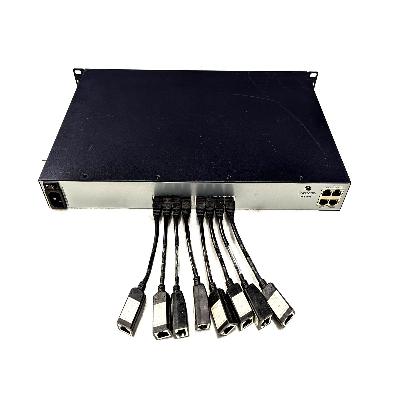
A console server is a network device that provides remote access to servers, routers, and other network equipment via a console port or serial connection.
Where To Use Console Server
Remote management of servers and network devices in data centers, co-location facilities, or other remote locations.
Secure access to console ports for maintenance, troubleshooting, and repairs.
Centralized management of multiple devices from a single interface.
Key Features Of Console Server
Secure authentication and authorization mechanisms.
Remote access via SSH, Telnet, or other protocols.
Support for multiple console ports and devices.
Event logging and monitoring capabilities.
How To Use Console Server
Connect the console server to the network and power it on.
Configure the console server using a web interface or CLI.
Establish remote access connections using SSH, Telnet, or other protocols.
Manage multiple devices from a single interface.
How Console Server Is Manufactured
The manufacturing process for console servers typically involves several stages, including design, prototyping, testing, and quality control.
Technical Specification Of Console Server
Number of Ports:
8-24 ports
Security:
SSH, SSL/TLS, AES encryption
Power Supply:
AC 100-240V, 50/60Hz
Baud Rate:
9600-115200 bps
The technical specification of a console server includes details such as the number of ports, security features, power supply requirements, and baud rate capabilities.
Description Of Console Server
A console server is a network device that provides remote access to servers, routers, and other network equipment via a console port or serial connection.
Related Products & Synonyms Of Console Server
Related products include network switches, routers, and firewalls.
Synonyms for console server include remote access server, serial console server, and out-of-band management server.