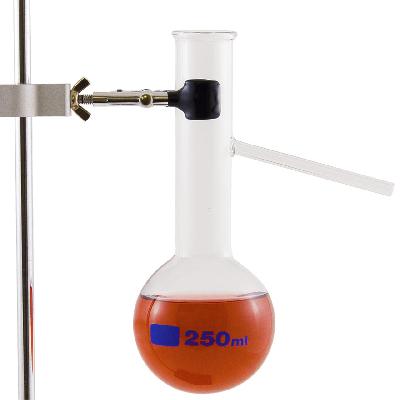
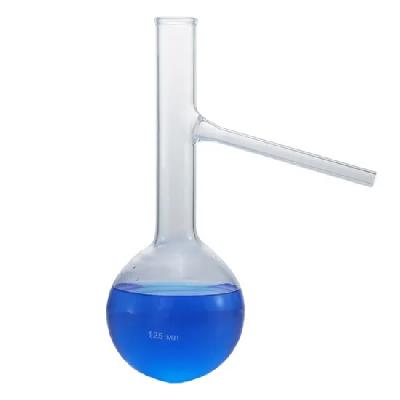
A distilling flask is a type of laboratory equipment used in various industrial and chemical processes, particularly for purification and separation of liquids.
Where To Use Distilling Flask
Chemical labs for distillation of chemicals and solvents.
Petrochemical plants for separation of petroleum products.
Pharmaceutical industries for purification of liquids and gasses.
Key Features Of Distilling Flask
Stable and durable design for high-temperature applications.
Accurate measurement markings for precise control over distillation processes.
Easy-to-clean surface for minimal contamination risk.
How To Use Distilling Flask
Ensure the distillation flask is properly cleaned and dried before use.
Fill the flask with the substance to be distilled, leaving sufficient headspace.
Heat the flask using a suitable heat source, monitoring temperature and pressure carefully.
How Distilling Flask Is Manufactured
Distilling flasks are typically manufactured from high-quality materials such as borosilicate glass or stainless steel, using techniques like blowing and forming.
Technical Specification Of Distilling Flask
Volume Capacity:
1-10 liters
Material:
Borosilicate glass or stainless steel
Height:
30-50 cm
Width:
10-20 cm
Neck Diameter:
2-5 cm
Shape:
Cylindrical or spherical
Neck Length:
10-20 cm
The technical specifications listed above provide a comprehensive overview of the design and functionality of distilling flasks, catering to various industrial applications.
Description Of Distilling Flask
A distilling flask is an essential tool in many industrial processes, offering a compact and efficient design for distillation purposes.
Related Products & Synonyms Of Distilling Flask
The distilling flask has several related products, including condensers and stills, which are used in conjunction with the flask for efficient distillation processes.
Synonyms of the distilling flask include laboratory stills, purification flasks, and condensation vessels, among others.