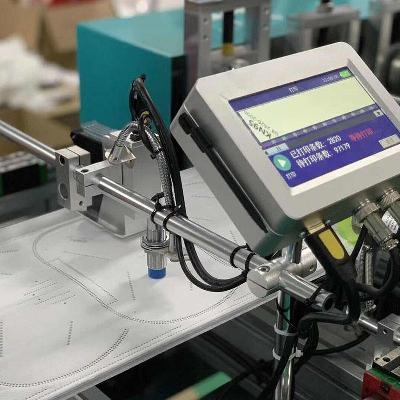
Ink coders are industrial devices used for printing and coding various materials, such as plastics, metals, and fabrics. They work by injecting ink or paint onto the surface of the material using a print head or needle.
Where To Use Ink Coders
Manufacturing plants for labeling and coding products
Warehouses for inventory tracking and management
Distribution centers for shipping and receiving
Quality control labs for testing and inspection
Key Features Of Ink Coders
High-speed printing capabilities for efficient production
Various ink types and colors available for customized prints
Compact design for easy integration into existing production lines
Durable construction for long-lasting performance
How To Use Ink Coders
Mount the ink coder on a production line or stand
Load ink cartridges and adjust print settings as needed
Align the print head or needle with the material surface
Start printing by activating the power supply and trigger mechanism
How Ink Coders Is Manufactured
Ink coders are manufactured using a combination of mechanical and electronic components, including metal alloys for the print head and needle, as well as printed circuit boards (PCBs) for the control unit. The manufacturing process involves precision engineering and quality control measures to ensure reliable performance.
Technical Specification Of Ink Coders
Print Speed:
Up to 500 characters per second
Resolution:
Up to 1200 dpi
Ink Type:
Water-based, solvent-based, or UV-curable
Interfaces:
USB, Ethernet, or RS-232
Power Supply:
110/230V AC, 50/60Hz
The technical specifications of ink coders ensure reliable and efficient printing performance in various industrial applications. The high print speed and resolution capabilities make them ideal for high-volume production environments, while the versatility in ink types and interfaces accommodates diverse material requirements.
Description Of Ink Coders
Ink coders are designed to provide accurate and durable printing solutions for various industries, including manufacturing, packaging, and labeling. They offer high-speed printing capabilities, precision control, and reliability in demanding production environments.