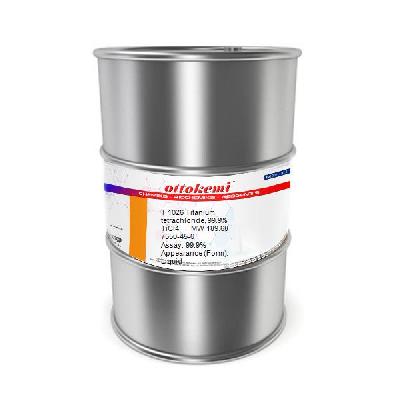
Titanium tetrachloride is a chemical compound with the formula TiCl4, also known as titanium(IV) chloride. It is a colorless liquid at room temperature and has a characteristic pungent smell.
Where To Use Titanium Tetrachloride
Titanium tetrachloride is commonly used in various industrial processes, including the production of titanium dioxide pigments, as a catalyst in organic syntheses, and as a reagent in research laboratories.
Key Features Of Titanium Tetrachloride
High purity and reactivity
Colorless liquid at room temperature
Pungent smell
Highly reactive and corrosive
How To Use Titanium Tetrachloride
Handle with care due to high reactivity and corrosiveness
Use in well-ventilated areas and protective gear
Follow standard industrial safety protocols
How Titanium Tetrachloride Is Manufactured
Titanium tetrachloride is typically manufactured through the reaction of titanium dioxide with chlorine gas.
Technical Specification Of Titanium Tetrachloride
Purity
99.5%
Density
1.8 g/cm3
Boiling Point
136.5°C
Color
Colorless
The technical specifications of titanium tetrachloride are crucial in determining its suitability for various industrial applications. The purity, density, boiling point, and color of the compound must be within acceptable limits to ensure proper performance. In general, a high-purity sample with a density close to 1.8 g/cm3 and a boiling point around 136.5°C is considered suitable for most applications.
Description Of Titanium Tetrachloride
Titanium tetrachloride is a versatile compound that has found numerous applications in various industries. Its high reactivity and purity make it an ideal choice for research laboratories, while its colorless appearance and pungent smell render it suitable for industrial processes.
Related Products & Synonyms Of Titanium Tetrachloride
Some related products of titanium tetrachloride include other titanium compounds, such as titanium dioxide and titanium nitride. The synonyms of titanium tetrachloride include TiCl4, tickle 4, Titanium(IV) chloride, CAS 7550-45-0, Tetrachlorotitanium.