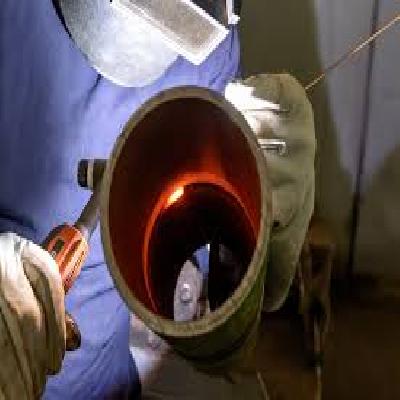
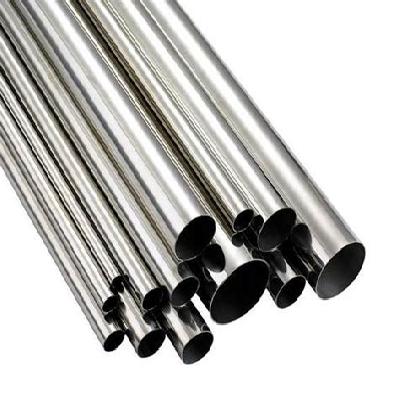
Welded tubes are a type of tubular product that is manufactured using the welding process, where two or more metal sheets are joined together to form a hollow tube. The welding process involves heating the metal sheets to high temperatures and then cooling them down to form a strong bond between them.
Where To Use Welded Tubes
Welded tubes are widely used in various industrial applications, including building and construction, automotive, aerospace, and oil and gas industries. They can be used as structural members, pipes, or tubing for conveying fluids.
Key Features Of Welded Tubes
Strong and durable
Resistant to corrosion
Precise dimensional control
Economical compared to other materials
How To Use Welded Tubes
Inspect the welded tubes for any defects or damage
Clean and prepare the area where the welded tube will be installed
Install the welded tube according to the manufacturer's instructions
Test the welded tube for any leaks or weaknesses
How Welded Tubes Is Manufactured
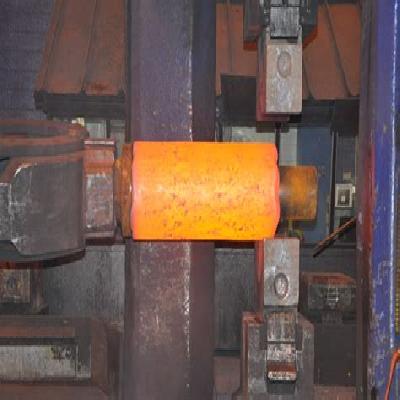
The manufacturing process of welded tubes involves several steps, including cutting and forming the metal sheets into desired shapes, welding the sheets together using various techniques such as gas metal arc welding (GMAW), shielded metal arc welding (SMAW), or flux cored arc welding (FCAW).
Technical Specification Of Welded Tubes
Diameter (mm)
16-610
Wall Thickness (mm)
1.2-10
Length (m)
3-12
Surface Finish
Smooth, rough, or coated
The technical specifications of welded tubes are critical in ensuring their quality and performance. The diameter, wall thickness, length, and surface finish of the welded tube must be carefully selected based on the specific requirements of the application.
Description Of Welded Tubes
Welded tubes are a type of tubular product that is manufactured using the welding process, where two or more metal sheets are joined together to form a hollow tube.