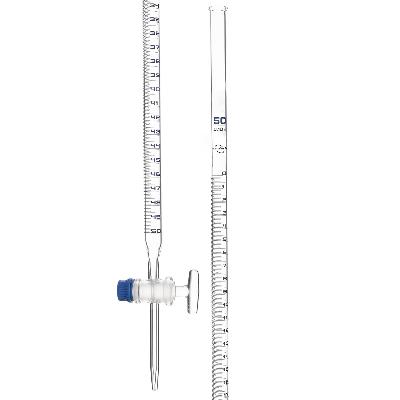
A burette stopcock is a type of valve used in laboratory settings to control the flow of liquids or gases through a burette or a similar measuring device.
Where To Use Burette Stopcock
Burette stopcocks are commonly used in various laboratory applications, including titration, chromatography, and spectroscopy.
Key Features Of Burette Stopcock
Accurate control over fluid flow
Durable construction for long-lasting performance
Easy to operate and maintain
High precision measurement capabilities
How To Use Burette Stopcock
Attach the burette stopcock to a burette or measuring device
Adjust the valve to control the flow of fluid
Monitor the fluid level and adjust the valve as needed
How Burette Stopcock Is Manufactured
Burette stopcocks are typically manufactured using high-quality materials such as stainless steel, brass, or plastic.
Technical Specification Of Burette Stopcock
Bore Size:
10mm
Length:
150mm
Overall Diameter:
20mm
Thickness:
2mm
Taper Size:
5°
The technical specifications of a burette stopcock are crucial in determining its accuracy and reliability in laboratory settings. The bore size, length, overall diameter, thickness, and taper size all contribute to the stopcock's ability to control fluid flow with precision. A well-designed and manufactured burette stopcock can provide accurate results and extend the lifespan of laboratory equipment.
Description Of Burette Stopcock
A burette stopcock is a precision instrument designed to control the flow of fluids in laboratory settings. Its compact design and accurate measurement capabilities make it an essential tool for various scientific applications.
Related Products & Synonyms Of Burette Stopcock
Some related products to the burette stopcock include: