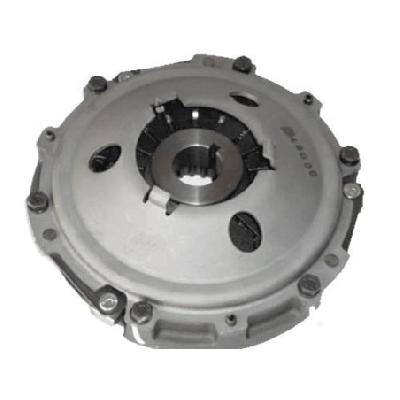
Industrial clutches are mechanical devices used to transmit power from a driving source, such as an engine or motor, to a driven load, like a conveyor belt or a machine spindle. They are designed to engage and disengage the power flow smoothly and efficiently, allowing for precise control over the operation of machinery.
Where To Use Industrial Clutches
Industrial clutches are used in a variety of applications, including textile machinery, conveyor belts, cranes, hoists, and machine tools. They are particularly useful in situations where rapid acceleration or deceleration is required, or when precise control over the speed of the driven load is necessary.
Key Features Of Industrial Clutches
High torque capacity and smooth engagement
Long lifespan and low maintenance requirements
Compact design and lightweight construction
Easy to install and maintain
Wide range of operating pressures and bore sizes available
How To Use Industrial Clutches
Choose the correct clutch size and type for your application
Install the clutch according to the manufacturer's instructions
Calibrate the clutch to ensure smooth engagement and disengagement
Maintain the clutch regularly to extend its lifespan
Replace the clutch when necessary, following the manufacturer's guidelines
How Industrial Clutches Is Manufactured
Industrial clutches are manufactured using a combination of advanced materials and precision engineering techniques. The process typically involves casting, machining, and assembly operations to produce the final product.
Technical Specification Of Industrial Clutches
Operating Pressure:
Up to 10 bar
Bore Size:
Diameter range: 50-250 mm
Torque Capacity:
Up to 100,000 Nm
Mounting Style:
Flange or shaft mounting options available
The technical specification of industrial clutches is designed to provide a clear understanding of the product's capabilities and limitations. The operating pressure range, bore size, torque capacity, and mounting style are all critical factors that affect the performance and application of the clutch.
In general, industrial clutches are designed to operate in a wide range of pressures, from low-pressure applications such as textile machinery to high-pressure applications like heavy industry machinery. The bore size of the clutch is also an important factor, as it affects the amount of power that can be transmitted through the device.
The torque capacity of industrial clutches is typically specified in units of newton-meters (Nm) and ranges from a few thousand Nm to over 100,000 Nm, depending on the application. Finally, the mounting style of the clutch is critical, as it affects the installation and maintenance requirements of the device.
Overall, the technical specification of industrial clutches provides a comprehensive understanding of the product's capabilities and limitations, allowing users to select the correct clutch for their specific application.
Description Of Industrial Clutches
Industrial clutches are designed to provide smooth and efficient power transmission in a wide range of applications, from textile machinery to heavy industry equipment. They are available in various sizes and types, including flange-mounted and shaft-mounted designs.
Related Products & Synonyms Of Industrial Clutches
Industrial clutches are related to other mechanical devices, including gears, belts, and couplings. They are often used in conjunction with these components to transmit power efficiently and smoothly.